Advanced Perimeter Hardening: The Complete Guide to an Under Vehicle Detection System
Securing the perimeter of a high-risk facility—whether it is a military outpost, an international airport, a government embassy, or a critical data center hub—requires an unyielding, multi-layered approach to physical security. While organizations invest heavily in biometric access control gates, facial recognition, and reinforced fencing, a critical, high-risk vulnerability often goes unaddressed just inches from the ground. The undercarriage of a car, van, or heavy commercial truck offers an ideal, obscured location for concealing contraband, weapons, tracking devices, or vehicle-borne improvised explosive devices (VBIEDs).To eliminate this dangerous blind spot, security directors are rapidly replacing manual checkpoints with a digital, automated under vehicle detection system. In the modern physical security landscape, relying on a guard with a mirror on a stick is a major operational risk. It introduces human error, slows down vehicle throughput, and leaves your facility exposed to sophisticated hidden threats.
At UVSS, we are a leading global reseller of enterprise-grade screening technologies and checkpoint infrastructure. We know that protecting a high-profile facility requires absolute precision, rapid image processing, and unquestionable reliability. In this technical procurement guide, we will break down how a high-performance under vehicle detection system operates, the primary features that define an elite setup, and why investing in automated scanning technology is a vital move for your security strategy.
The Operational Failures of Manual Under-Carriage Inspection
Before analyzing the return on investment of a digital under vehicle detection system, it is important to examine the profound limitations of legacy inspection techniques. For years, security checkpoints relied on under-vehicle mirrors—essentially a mirror mounted to a rolling pole.
The hidden vulnerabilities of manual inspection include:
- Severe Human Fatigue: Expecting a guard to peer under hundreds of vehicles per shift while maintaining perfect concentration is unrealistic. Subtle, dangerous structural changes are easily missed.
- Operational Bottlenecks: A meticulous physical inspection takes up to two minutes per vehicle. In high-traffic locations, this manual delay creates massive traffic queues that compromise logistics.
- No Historical Tracking: Manual mirror checks offer zero data logging. If a vehicle breaches a zone, there is no digital record or visual archive of what its undercarriage looked like upon entry.
Deploying an automated under vehicle detection system instantly converts a slow, subjective process into an objective, data-rich screening operation. The system creates an unalterable digital footprint of every single vehicle undercarriage passing over the sensor bed.
How an Under Vehicle Detection System Functions
An enterprise-class under vehicle detection system is a highly integrated piece of technology that combines rugged optics, synchronized illumination, and smart image-stitching software.
┌───────────────────────────────────────────────────────────┐
│           UNDER VEHICLE DETECTION SYSTEM WORKFLOW         │
├───────────────────────────────────────────────────────────┤
│  1. Vehicle triggers directional loop/radar sensors       │
│  2. Shadowless LED array floods the undercarriage         │
│  3. High-speed camera captures continuous digital slices  │
│  4. Software stitches slices into a seamless HD image     │
│  5. Onboard AI flags anomalies against database baseline  │
└───────────────────────────────────────────────────────────┘
The scanning cycle occurs automatically within seconds:
- Sensor Activation: As a vehicle approaches the gate, embedded inductive loops or radar sensors detect its presence and traveling speed, instantly activating the system from a low-power standby mode.
- Synchronized Illumination: High-intensity, shadowless LED arrays activate to wash out the deep shadows cast by the vehicle’s exhaust, axles, and fuel tanks.
- High-Speed Line-Scanning: A specialized digital line-scan camera captures thousands of high-resolution horizontal slices as the vehicle drives forward.
- Composite Stitched Visualization: The processing engine combines these individual visual slices into a flawless, high-definition composite image of the entire undercarriage, outputting it onto the operator’s console screen in real time.
Key Commercial Features to Prioritize
As a premier specialized reseller, UVSS vets manufacturers to ensure our clients receive maximum reliability. When shopping for an under vehicle detection system, ensure your technical team prioritizes these core features:
1. AI-Powered Anomaly and Change Detection
A modern under vehicle detection system must not rely purely on human eyesight. The most advanced systems leverage integrated Artificial Intelligence (AI) and machine learning algorithms. The system automatically cross-references the live scan against a reference model or a past entry image of the exact same vehicle make. If the software spots an added magnetic box, an anomalous wire, or an unmapped structural cavity, it triggers an instant alarm for the security team.
2. High Axle Weight and All-Weather Durability
Because the core scanner housing is embedded directly into the driving lane, it faces intense mechanical and environmental stress. A dependable under vehicle detection system must feature a ruggedized, heavy-duty housing capable of enduring massive axle loads (frequently up to 40 tonnes) to handle fully loaded commercial semi-trucks. Look for an IP68 weatherproofing enclosure rating alongside integrated heating and cooling fans to prevent fogging, frost, and condensation from clouding the camera glass.
3. High-Speed Image Processing
Security must support, not paralyze, your facility’s daily logistics. An elite under vehicle detection system is engineered to capture crisp, unblurred images at driving speeds of up to 30 km/h. Once the vehicle clears the scanning unit, the processing server must deliver the fully assembled image to the guard station in less than 3 seconds, preventing lane backups.
Choosing the Right System Configuration for Your Site
Every checkpoint layout presents different physical constraints. To accommodate these differences, an under vehicle detection system is manufactured in two primary formats:
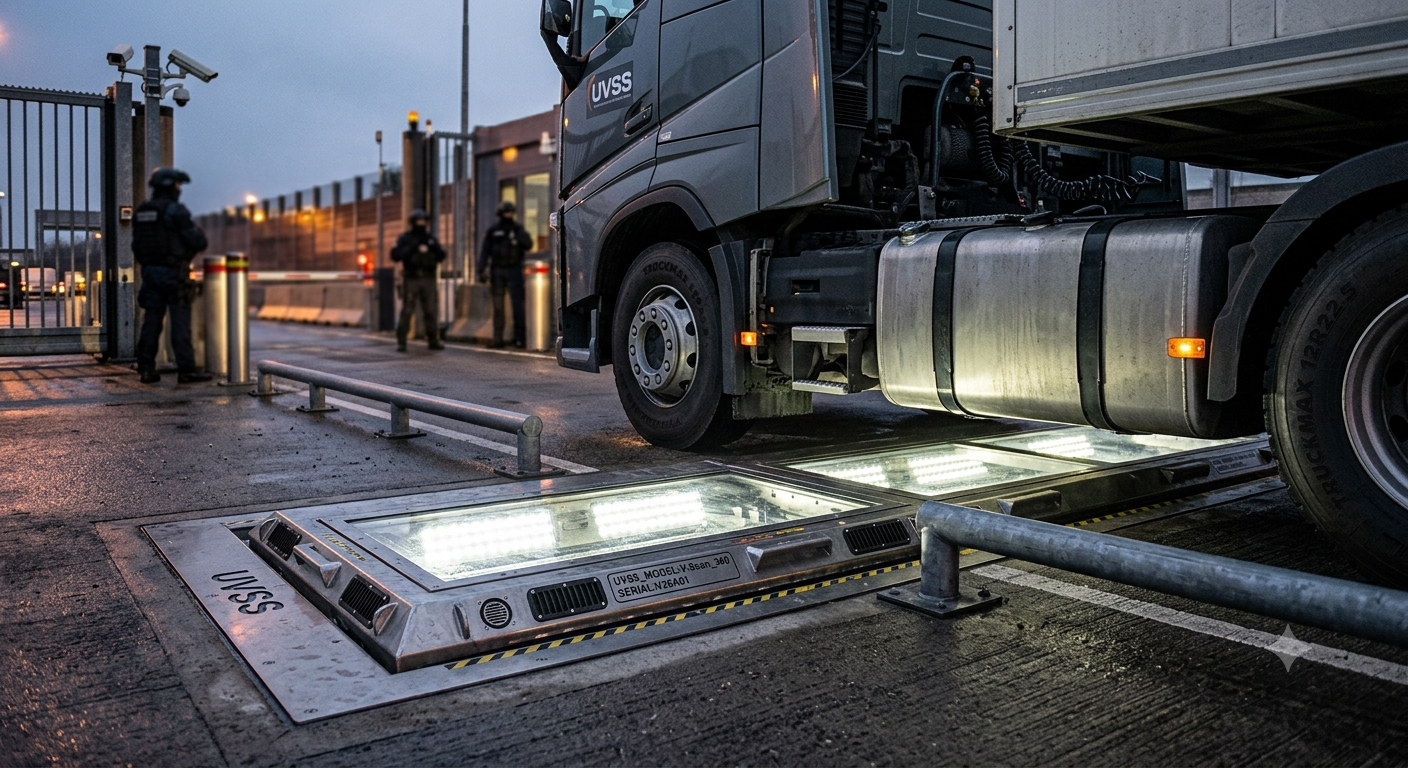
- Fixed (Flush-Mounted) Solutions: These units are permanently installed into a shallow trench cut directly into the roadway, sitting completely level with the driving surface. This configuration is highly recommended for permanent, high-security checkpoints like custom border crossings or permanent corporate campuses, as it withstands non-stop, heavy heavy-freight traffic over long-term lifecycles.
- Portable (Surface-Mounted) Solutions: These systems feature a low-profile, modular ramp layout that sits on top of the asphalt. A portable under vehicle detection system can be fully assembled and running in under ten minutes without requiring construction work. This is the perfect operational choice for temporary diplomatic events, spot-check operations, or remote temporary facilities.
Seamless Integration into a Comprehensive Security Infrastructure
An isolated tool leaves gaps in your defense network. To achieve maximum value and control, your under vehicle detection system should tie natively into your existing physical security ecosystem.
By linking your under-carriage scanner with an Automatic Number Plate Recognition (ANPR) camera, driver-facing cameras, and access control barriers, you build a comprehensive profile for every single vehicle entry event. If the AI flags a threat underneath a vehicle, the system software can instantly signal your rising bollards or drop arms to lock down, preventing vehicle access while sending a synchronized alert to your central Security Operations Center (SOC).
Why Partner with UVSS as Your Specialized Reseller?
Procuring an entry screening solution requires deep technical expertise. At UVSS, we pride ourselves on being physical perimeter security consultants rather than simple product catalog vendors. Sourcing your under vehicle detection system through our network ensures you receive objective, high-performance systems designed specifically to match your exact facility footprint and operational budget.
We support your engineering and security directors through every single step of the layout process, providing custom site evaluations, network architecture mapping, integration with existing video management systems (VMS), comprehensive guard training, and long-term tech support to maintain a zero-fail security perimeter.
Conclusion: Secure Your Baseline and Eliminate Risk
Leaving the undercarriage of an arriving vehicle unmonitored is an unacceptable vulnerability in today’s threat environment. Outdated physical mirror checks slow down operations and leave you exposed to well-hidden risks. Upgrading your checkpoint infrastructure to an automated, intelligent under vehicle detection system is the definitive way to protect your personnel, automate your compliance data logs, and establish complete command over your perimeter entry points.
Are you ready to eliminate the blind spots at your checkpoint? Contact UVSS today to speak with an engineering specialist, book a live system demonstration, and discover how a professional under vehicle detection system can secure your facility’s future.