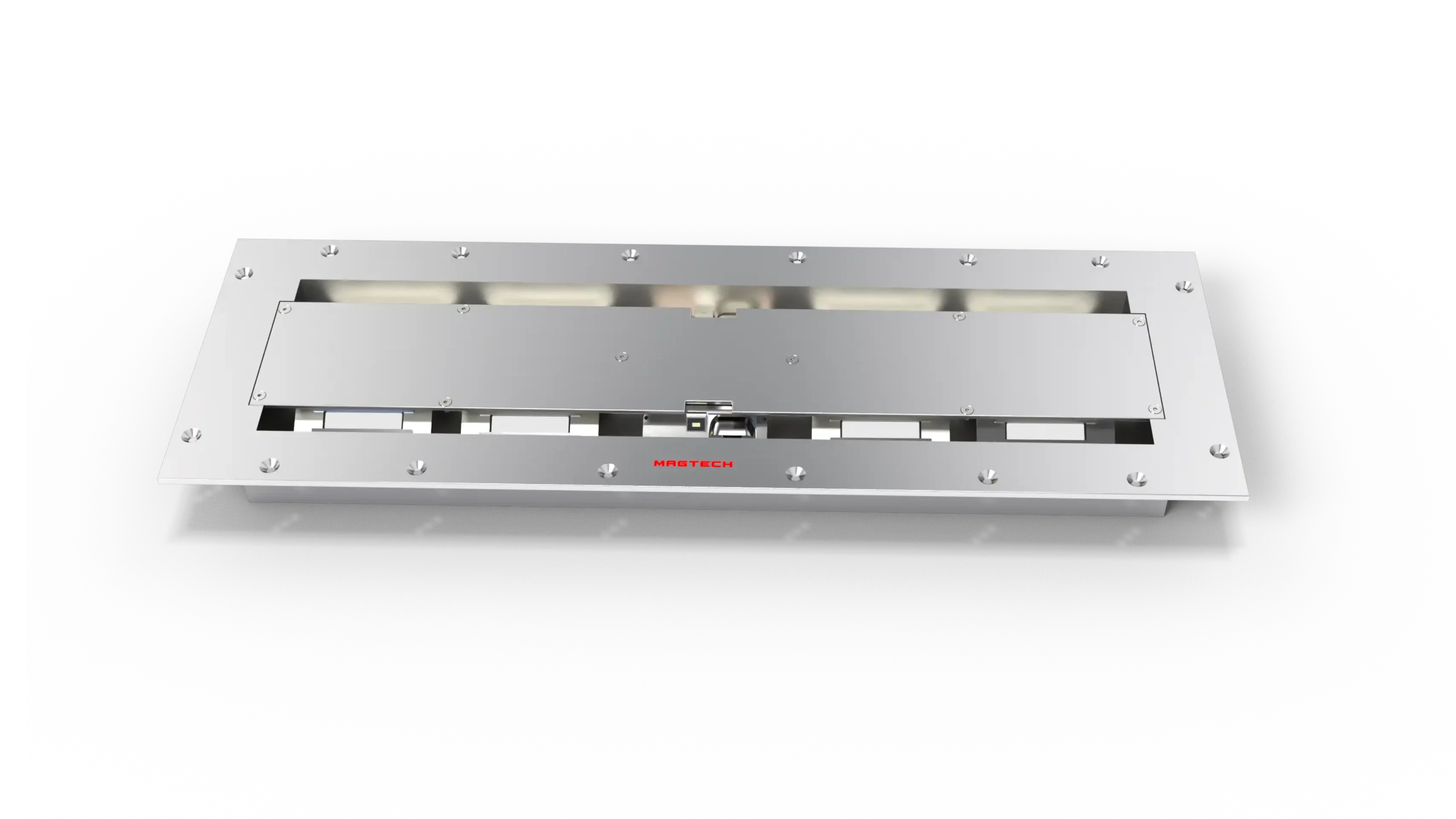
Beyond 2D: Top Features to Look for in a 3D Under Vehicle Scanner
In the ever-evolving domain of perimeter security, checkpoint vulnerabilities frequently exist beneath our feet. For decades, security teams relied on manual inspection mirrors or legacy 2D linear scanners to monitor the underside of vehicles. However, as modern concealment methods grow increasingly sophisticated, flat, two-dimensional images are no longer sufficient to secure high-risk infrastructure. Shadows, deep mechanical recesses, and perspective distortions often allow illicit objects to pass through checkpoints undetected.
To effectively eliminate these blind spots, forward-thinking security integrators, facility managers, and procurement officers are upgrading to volumetric imaging. As a premier reseller of elite perimeter surveillance technology, UVSS evaluates and distributes the world’s most robust security systems. If you are looking to harden your perimeter, here are the top features to look for in a 3D under vehicle scanner to ensure your investment delivers uncompromised tactical protection.
1. Stereoscopic Vision and True Depth Detection (The Z-Axis)
When analyzing the top features to look for in a 3D under vehicle scanner, the core technology used to capture data must be your primary consideration. Traditional systems look only at the horizontal ($X$) and vertical ($Y$) axes. A true 3D architecture adds the critical $Z$-axis, providing genuine depth perception.
The most effective systems on the market utilize calibrated, side-by-side dual area-scan cameras to mimic human binocular vision. This stereoscopic depth accuracy allows the system to compute a precise disparity map and convert it into a high-fidelity 3D point cloud.
- Why it matters: Standard 2D images can easily confuse a harmless oil stain or mud splatter with a dangerous modification. A system equipped with stereoscopic depth measurement can analyze the actual thickness of a foreign item, instantly differentiating a flat surface mark from a solid attached object.
2. AI-Powered Automated Threat Detection and Anomaly Recognition
In high-throughput environments like international airports, border crossings, and corporate headquarters, relying solely on human operators to catch hidden threats is an operational bottleneck. Therefore, automated intelligence is one of the non-negotiable top features to look for in a 3D under vehicle scanner.
Advanced scanning units feature real-time AI anomaly detection algorithms. When a vehicle passes over the scanner, the software automatically compares the live 3D model against a reference database of clean vehicle profiles. If the system identifies sudden structural deviations, loose wiring, or unexpected components, it generates an immediate audio and visual alert for your security operations center (SOC).
3. Bi-Directional High-Speed Imaging (0 to 75 km/h)
Legacy line-scan systems suffer from a severe operational flaw: they require vehicles to drive over the sensor array at a perfectly constant speed. If a vehicle accelerates, slows down, or stops mid-scan—which happens constantly during rush-hour queues—the resulting 2D image becomes stretched, compressed, or distorted beyond recognition.
When searching for the top features to look for in a 3D under vehicle scanner, ensure the platform utilizes high-frequency area-scan sensors rather than line-scan cameras. Area-scan technology captures comprehensive segments of the undercarriage simultaneously, making the system entirely independent of vehicle speed or driver behavior. High-tier models can handle vehicle speeds ranging from complete standstill up to 75 km/h, ensuring traffic keeps moving without sacrificing scan accuracy.
4. Comprehensive Interactive 3D Visualization and Morphed Viewing
What happens after an anomaly is flagged? The software interface must empower your security personnel to make rapid, informed decisions. A core component within the top features to look for in a 3D under vehicle scanner is an interactive, multilingual Graphical User Interface (GUI) that supports detailed interactive viewing.
The system should stitch the dual-angle images into a complete, rotatable 3D color model. Operators should have the capability to:
- Pan, Tilt, and Rotate: View the undercarriage from various perspectives to see “around” mechanical obstructions like exhaust pipes and heat shields.
- High-Magnification Digital Zoom: Zoom in up to 25x onto niche areas or hard-to-view components to inspect suspicious objects closely.
- Dual View Comparison: View the current live scan side-by-side with historical data from the same vehicle to identify unauthorized modifications instantly.
5. Multi-Sensor Integration and API Architecture
An under-vehicle scanner shouldn’t operate as an isolated security silo. To achieve true perimeter hardening, seamless integration with external security modules must be ranked high on your checklist of top features to look for in a 3D under vehicle scanner.
The backend software should offer an open API that links with:
- Automatic Number Plate Recognition (ANPR / ALPR): To automatically cross-reference the undercarriage scan with the vehicle’s registration data.
- Driver Image Capture Modules: To capture the driver’s face in real-time, tying a human identity to the physical vehicle profile.
- Physical Access Barriers: The ability to provide a contact pulse to immediately trigger and lock down boom barriers, tire killers, or hydraulic bollards if a threat is identified.
6. All-Weather Heavy-Duty Durability (IP68 Protection)
Because scanning units are installed directly into roadways, they are subjected to brutal environmental stressors, including heavy rain, freezing temperatures, dust, and immense physical weight. Consequently, rugged engineering is among the most practical top features to look for in a 3D under vehicle scanner.
Look for underground enclosures constructed from structural steel and checkered stainless steel that carry a minimum IP68 waterproof and dustproof certification. Additionally, high-end scanners feature an automated integrated air-cleaner compressor mechanism. This system automatically blows debris, dust, and rainwater off the camera lenses every time a vehicle passes, minimizing manual maintenance and ensuring crystal-clear imaging in all weather conditions.
Why Procure Your 3D UVSS Through a Trusted Reseller?
Identifying the top features to look for in a 3D under vehicle scanner is only the first step; successful implementation requires expert deployment. At UVSS, we serve as a dedicated security consultancy and reseller, matching critical facilities with top-tier hardware tailored to their specific network topology.
Whether your operations require a permanent, flush-mounted underground system for an uncompromised entry lane or a portable, surface-mounted configuration for temporary checkpoint operations, we provide the technical expertise necessary to protect your facility from emerging physical threats.
Conclusion: Future-Proof Your Perimeter Checkpoints
Upgrading your checkpoint architecture to include the top features to look for in a 3D under vehicle scanner is a vital step toward comprehensive risk mitigation. By prioritizing stereoscopic depth sensing, AI-driven automation, and rugged all-weather builds, you protect your infrastructure from hidden threats while optimizing traffic flow and operator efficiency.
Eliminate your blind spots before they are exploited. Contact the technical team at UVSS today to schedule a comprehensive site analysis and discover how a next-generation 3D under-vehicle surveillance ecosystem can safeguard your assets for 2026 and beyond.